
Haunted New Orleans Cemeteries: The Cities of the Dead
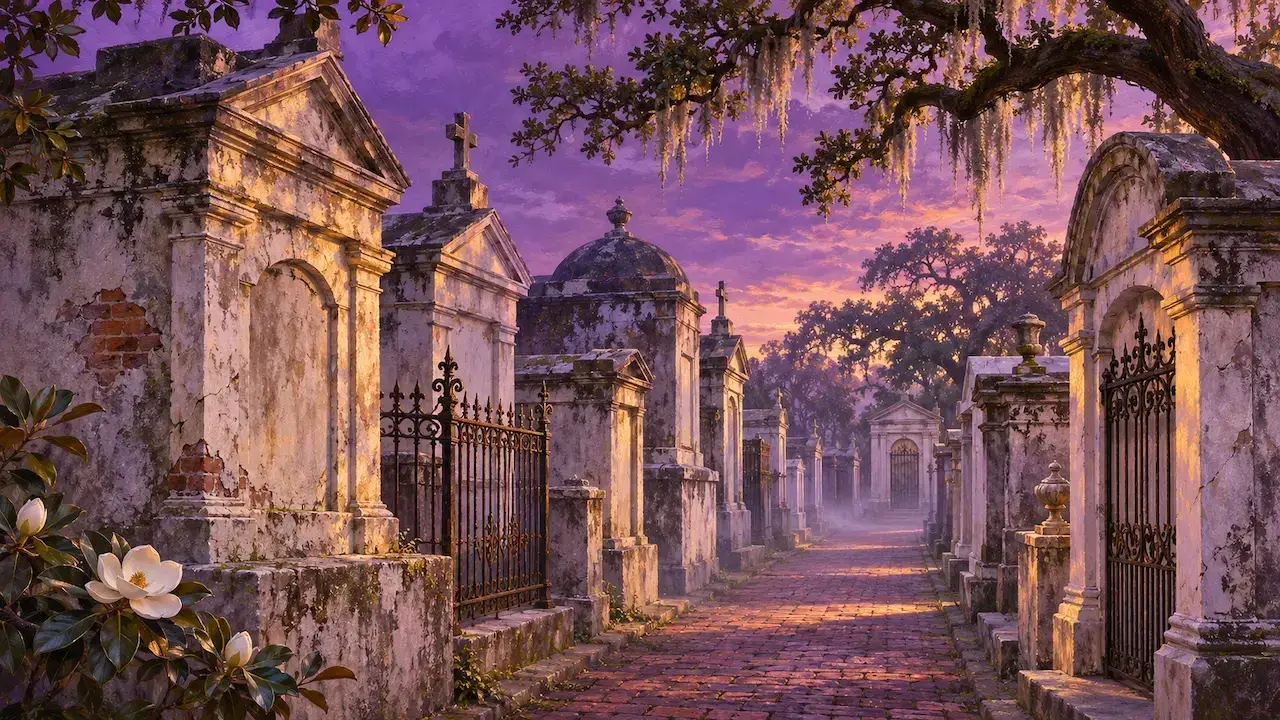
New Orleans cemeteries are called Cities of the Dead, a phrase often credited to Mark Twain, because the rows of tombs look like streets. They are also where a lot of the city's ghost stories collect. Before the ghosts, though, there's a better question: why is everyone buried above ground?
Why above ground? The water table is only part of it
The usual answer is that the water table is so high that coffins would float. There's something to that, but it isn't the whole picture. A National Register of Historic Places document describes the custom as Spanish in origin: the first cemetery in the colony, from the French period, was below ground, and St. Louis Cemetery No. 1, created by the Spanish governing body in 1789, was the first above-ground graveyard. The same document says the water-table explanation may partly account for the practice but isn't the full story. Louisiana's French population embraced the custom, and so did later American arrivals.
There's also the matter of reuse. By local tradition a tomb isn't reopened for at least a year and a day, a wait meant to allow time for decomposition.
St. Louis Cemetery No. 1
Established by Spanish royal decree on August 14, 1789, St. Louis No. 1 is the oldest cemetery in New Orleans that visitors can still walk through. It replaced the older St. Peter Cemetery, which no longer exists. It holds roughly 700 tombs, and one frequently cited count puts the number of people buried there above 100,000, since tombs are reused.
It's also the city's most famous ghost cemetery. The tomb most visitors come for belongs to Marie Laveau, and it's among the most visited sites in the city. Another well-known legend concerns Henry Vignes, a sailor said to have had nothing but the paperwork for a burial plot, who was cheated out of it and ended up in a pauper's grave. In the story, he can't rest. It's a legend, but it's told so often that it has become part of the place.
One practical note: after years of vandalism, the Archdiocese of New Orleans now requires visitors to enter with a licensed tour guide. Rules like that can change, so check before you go.
Lafayette Cemetery No. 1
Across town in the Garden District, Lafayette Cemetery No. 1 was founded in 1833 for the City of Lafayette, which New Orleans annexed in 1852. It was listed on the National Register of Historic Places on February 1, 1972, and it's still in use. The World Monuments Fund put it on its Watch list in 1996 because of its deteriorating condition. As tour companies tell it, its ghosts include yellow fever victims and Civil War soldiers. For the fever years behind that, see New Orleans Ghost History.
How to visit well
These are working cemeteries and family burial grounds, not sets. The rule requiring a guide at St. Louis No. 1 exists because people damaged tombs. Treat the place the way you'd want your own family's tomb treated, and the ghost stories will still be there.
For how to weigh the stories you'll hear along the way, see Haunted New Orleans Stories: Which Parts Are True?. The whole topic is mapped in the Haunted New Orleans guide.
Meet the Chief
If you'd rather have fiction than folklore, meet Chief Marcus Thibodeaux, a New Orleans police chief and former quarterback who has spent too many years squinting into other people's lies. His origin story, The Golden Boy, is free when you join the list. His ongoing cases, including the ones where he calls in a tarot reader, are on the Patreon.
Where I got this
- Metairie Cemetery National Register nomination, National Park Service, for the Spanish origin of above-ground burial and the limits of the water-table explanation
- Why Are People Buried Above Ground in New Orleans?, NOLA Tour Guy, for the year-and-a-day tradition
- St. Louis Cemetery #1, Legends of America, for the 1789 decree, and Only In Your State, for the tomb count, the burial estimate, and the Henry Vignes story
- New Orleans' Oldest Cemetery, Islands, for the licensed-guide rule and the vandalism behind it
- Lafayette Cemetery No. 1, The Cultural Landscape Foundation and World Monuments Fund, for the 1833 founding, the 1852 annexation, and the Watch listing
- The Ghosts of Lafayette Cemetery, Ghost City Tours, for the ghosts as tours tell them
- The Ghosts of Haunted St. Louis Cemetery, Ghost City Tours, for the Mark Twain attribution
Come a little closer.
Remy Blackwood is a New Orleans detective with something wild under his skin.
Share your email and The First Change finds you right away.
Free. Never spammy. Leave whenever you like.
