
Ghost or Old House? Why New Orleans Houses Creak and Shift
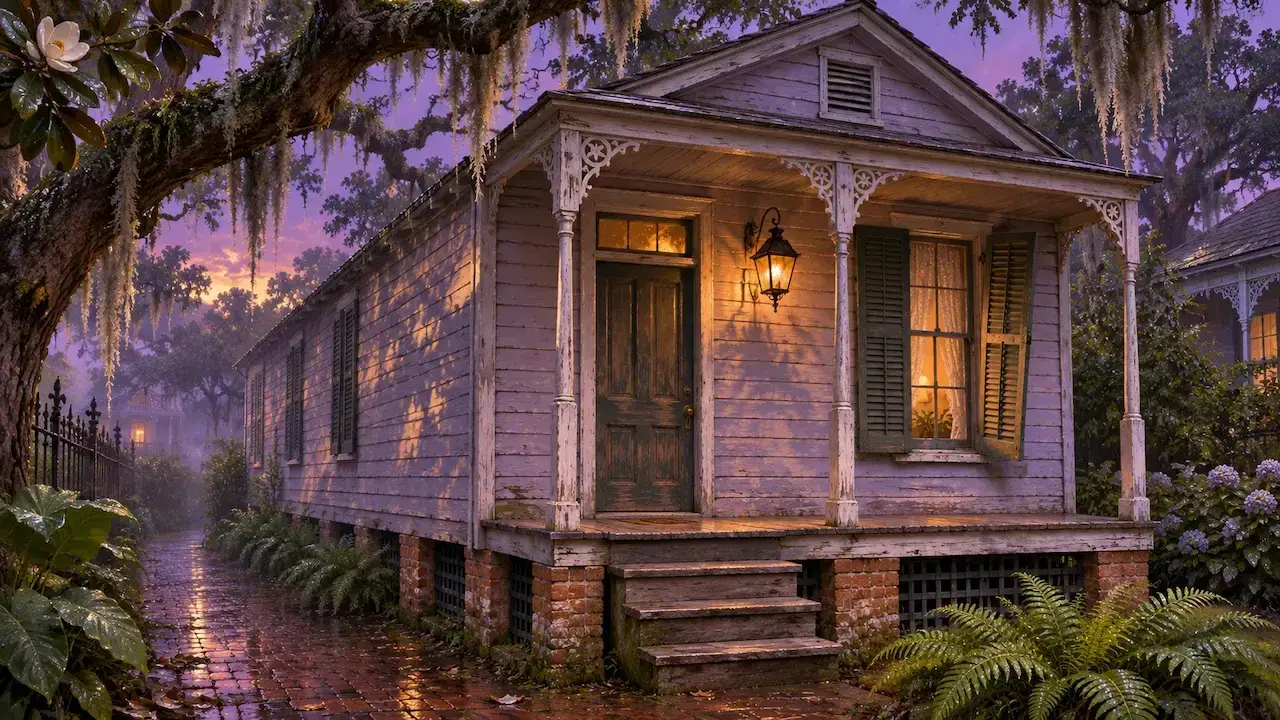
Every haunted house story starts the same way: a sound. A creak at night, a pop in the wall, a door that won't stay shut. In New Orleans, where the houses are old, the air is wet, and the ground itself is soft, a lot of those sounds have a plain explanation. Not all of them. But it's worth knowing what the house does on its own before you decide it's something else.
The weather does it
Most ordinary house noises come from the building responding to temperature and humidity. Materials expand and contract at different rates, so parts of the structure rub against each other and make groaning or creaking sounds. Wood is the biggest contributor: it absorbs moisture and swells in humid weather, then dries and shrinks. In a place as damp as New Orleans, that cycle never really stops.
The ground moves too
New Orleans sits on soil that compresses over time, which is called subsidence. Many of the city's older homes were built on pier-and-beam foundations, raised above the ground on wooden or brick piers, and as the soil shifts the piers can move, so parts of the house dip or rise. Foundation contractors in the city also describe the clay as swelling when wet and shrinking when dry, a cycle that can leave floors uneven and doors that no longer close properly.
The scale can be large. In one documented case in the Lakeview neighborhood, photographs taken since a house was built in 1941 show the ground around it sinking a total of 32 inches. A CBS News report on southern Louisiana put it bluntly: houses that aren't built on deep pilings tip and crack.
The shotgun house
The shotgun house is the signature New Orleans building: long and narrow, with rooms lined up one behind the other, and typically raised two to three feet off the ground. It became a major urban house type in the second half of the nineteenth century. Where it came from is still uncertain. What matters here is the combination: wood construction, a raised pier foundation, and soft, damp ground. That's a house that talks.
When it's the house, and when to look closer
Creaks and pops that follow the weather, the time of day, or the season usually point to wood and temperature doing what wood and temperature do. Sounds that are getting worse are different. A real estate trade article on spooky home sounds notes that creaking can also signal rotting wood or foundation problems. Foundation contractors list the signs to watch for: floors that slope noticeably, gaps between the floor and the baseboards, and doors and windows that start to stick. If you see those, call a foundation inspector before you call a medium.
What Celeste suggested
This is the instinct at the center of The Woman Who Listened, one of the Jasmine & Rain stories. A police chief brings a tarot reader a shotgun cottage that three cleaning crews refused to finish: footsteps in empty rooms, singing behind a locked door, windows standing open. Her advice is to stop treating the house like a person and start treating it like a house, and one of the things she asks is whether anyone had it inspected. The story is fiction, but the instinct is a good one. It's on the Patreon.
For the famous hauntings and how to test them, see Haunted New Orleans Stories: Which Parts Are True? and New Orleans Ghost History. The whole topic is mapped in the Haunted New Orleans guide.
Meet the Chief
The police chief in that story is Marcus Thibodeaux, a former quarterback who has spent too many years squinting into other people's lies. His origin story, The Golden Boy, is free when you join the list. More stories with the Chief, and with Celeste, the tarot reader he calls when a story doesn't add up, are on the Patreon.
Where I got this
- Old house noises, Progressive, and House Creaking at Night, Cal Poly housing, for temperature, humidity, and wood movement
- 7 Spooky Home Sounds Owners Shouldn't Ignore, National Association of Realtors, for when creaking can signal a problem
- Why New Orleans Houses Sink, Big Easy Magazine, for subsidence and pier-and-beam foundations
- Top 10 Foundation Problems New Orleans Homeowners Face, Academy House Leveling, a local foundation contractor, for the swelling clay and the warning signs
- Subsidence in New Orleans: A Photographic Case History of the Lakeview Subdivision, Snowden and Rucker, for the 32 inches
- That Sinking Feeling, CBS News, for houses without deep pilings tipping and cracking
- Shotgun House, 64 Parishes, Shotgun Houses, Britannica, and Shotgun house, Wikipedia, for the style, the raised foundation, and the uncertainty over its origin
Come a little closer.
Remy Blackwood is a New Orleans detective with something wild under his skin.
Share your email and The First Change finds you right away.
Free. Never spammy. Leave whenever you like.
